I opened up the year with a new-patient visit with my new vascular surgeon.
Right before I headed to his office early on this month, I realized that I have gone more than four years without a vascular specialist monitoring my arteries. Considering the amount of disease in both my abdominal but mostly in my carotid artery, this sounds crazy to me! I used to have an amazing vascular surgeon when I lived in Utah. We moved to the Triangle region of North Carolina in 2017 specifically for the well-reputed healthcare we hoped to find here. And so far that has not proven to be the case. Provo, Utah offered a lot more quality care than all the specialists I have seen so far in North Carolina. The constant dismissal of my cardiologist that I should not see a vascular surgeon mostly contributed to this delay. But I persevered.
It was also a matter of Karma, or chance, or call it whatever it was ... but even when he did refer me to a vascular surgeon, the week before my appointment was supposed to happen, she had to have emergency back surgery and my first appointment with her was canceled. I had to be referred to another vascular surgeon and they are busy people. It took months before I got another appointment. But I digress ...
Prior to coming to this surgeon, I saw a cardiovascular interventionist cardiologist: they cath, but they don't cut. He was supposed to manage my arterial disease and my cardiologist was supposed to only manage my heart. I have written several times about how the vascular cardiologist downplayed my condition and it got to be so bad that I had to stop seeing him - I was not gaining any new information, I was going nowhere with understanding what kind of plan he had to manage my disease. So, I asked my cardiologist for another referral, this time to a vascular surgeon.
You will find this a lot with this disease, especially if you are younger. People that are less knowledgeable in treating FH will not look past your appearance. They will not understand the danger that is developing in your arteries right as you speak to them. You think this is an exaggeration, but it is not. Like I said: you must persevere and find the best care for yourself.
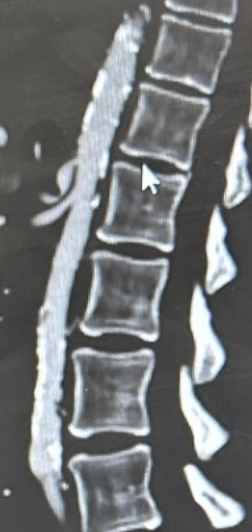
The new vascular surgeon ordered a couple of tests before he saw me: a CT scan of my abdomen (with contrast) and an ABI (Ankle–Brachial Pressure Index) of my leg - this measures your blood pressure in several spots on both of your legs before and after exercise. If the pressure is higher after exercise, this means that you have claudication (narrowing of arteries, or poor blood flow in your legs), or your abdominal aorta is not supplying your legs with enough blood.
I have done this test several times before and it usually shows mild to moderate claudication, depending on who does the test. Not sure why he could not use the results from the same test my cardiologist did earlier this year, but he needed his own results. This time, they also sent me to what it ended up being the wrong lab: the exercise they have you do before checking your blood pressures the second time is to walk on a treadmill at a certain speed and with a certain incline. This lab had no treadmill. I was surprised about this but who am I to argue? They, instead, had me do calf raises (standing on your toes) for 3 minutes and they asked me if my legs were cramping. They were but I was pretty sure it was not from exercising too much but from muscular cramps of the legs not doing calf raises every day ... But they didn't care about that - they measured the pressures after this "exercise" and they were almost identical with the ones at rest. The test came back for the first time as "no claudication."
The visit with the surgeon followed. I started by first asking him if he knows anything about FH or about HoFH specifically. Initially he said "no" and when I looked shocked he apologized and said he could not hear clearly what I said because of my mask and that he is very familiar with FH.
Just for safe measure, I explained to him my journey in a nutshell, from when I was diagnosed at age 8, through all the treatments, the open-heart surgery, the heart attack, etc. I told him how I have been disappointed in the care I have received with the current medical system for my arterial health specifically and I was hoping he will fix that.
I explained to him my concerns with what I know the tests show - a narrowing abdominal aorta and several of its branches, narrowings in the carotids, etc. I also added that I am not looking for surgery at this time (he is a surgeon, I was thinking, the only way they know to fix things is to cut), unless it was absolutely necessary. I told him I am young but I have an old people's disease so it's tricky to do surgery unless it's really thought-out because things that just work for older people (like stenting) might not work for me. If I was wrong, I asked him to explain why. I told him that several doctors dismissed me as too young or not having enough disease to really be aggressive about watching the disease's progress and that cannot happen here. I need to be taken seriously.
Some of the points he made and some of the learnings I gathered from our appointment:
- Before we got to talking about my tests and to assess my situation, he started by saying that I should never let any doctor make me feel bad about standing up for myself. He said that is the "absolutely right thing to do as a patient: stand up for yourself and demand answers" so I can understand the situation. I was glad to hear that.
- Then, he wanted to make another thing very clear: just because I had an incredibly involved open-heart surgery which showed more then severe disease in my coronary arteries and in my aorta, to the point that the aorta had to be replaced and the arteries had to be repaired and bypassed it does not necessarily mean that is the case of the aorta and all its branches "in all the other vascular beds in the body. That for whatever reason, and we don't know why, different beds see the disease at different speeds." This was news to me. I have generally been advised to always monitor all arteries, not just the heart.
- He then said the ABI did not show signs of claudication which is good - this means the abdominal aorta sends enough blood to the legs which have good flow themselves. I challenged his statement, however: I asked him if "3 minutes of calf raises can be considered proper 'exercise' for a 46 year old" to judge the true condition of the leg arteries. He said it absolutely does not. He was not aware they did the test without a treadmill and he said the exercise must be in line with the patient and their condition and ability to exercise to show accurate results. So, he is sending me back to get the ABI done again in 6 months. (Never mind that I already paid for a test that is no good - no apology or do-over there).
- When we got to the CT of my abdominal aorta, he did not go by the findings on the results, he brought up his own plan of action. He first said I did not have enough disease in the abdominal aorta right now to warrant any intervention. Then, he said my abdominal aorta is very small, just anatomically - it is slightly larger (by only 2mm) than the iliac branches which stem from it. Normally, the aorta should be twice the diameter of the iliac arteries. Add some calcification on top of this, you get a very narrow aorta. But the problem is not that it's stenotic, it's that it is too small to begin with. This is one of the reasons that does not make me a candidate for inserting a stent, if needed. He said the only thing he could do should I need surgery for an occluded aorta would be to do something similar to exploratory surgery (where they open up your abdomen) and replace the diseased portion of the aorta. This cannot be done laparoscopically or through any other of non-invasive kind of surgery. However, we are not at that bridge yet.
- He also said that one of my celiac arteries (that distribute blood to different organs in the abdomen) is compressed by my diaphragm muscle (again, my anatomy, not any kind of arterial disease) which is preventing it to be fully open, but this would have to be addressed by a general surgeon and not himself. He also said there is nothing he recommends at this time for the celiac arteries, as well.
- In conclusion the plan is:
- Do nothing now - the disease is not severe enough to suggest any kind of intervention.
- Repeat the ABI test in 6 months to get better "exercise" results. As long as there is good blood flow in the legs, he does not want to image the abdomen. He sounded pretty drastic to me when he said "even if the abdominal aorta were to become completely occluded, if we have good flow in the legs, we don't worry about it." I am still kind of noodling with this thought and will probably press for a better understanding of what's going on in the abdomen.
- Also, as part of his plan, he wants to do a carotid scan in 6 months to see the progress, if any, of that "vascular bed" which he intends to also monitor closely. We spoke about pre-stroke symptoms and he urged me to call him the minute I might think I experience them. (The cardiologist said he would monitor the carotids every two years, but the vascular surgeon wants this done every year).
- He concluded by saying that everything I do for heart health is 100% beneficial for vascular health: keeping the cholesterol as low as I can, taking all the recommended medications for cholesterol and blood pressure, keeping the blood pressure as low as I can, eating a healthy, balanced diet, not smoking, not being overweight, and moving. "Moving, moving, moving. Moving is the best medicine for your arteries." - he said.
He was mostly concerned with the legs - he kept saying that the one, most important test he will have to do every year with be the ABI test and that as long as the flow stays healthy in the legs, he trusts that the abdominal aorta is fine.
I asked to be imaged every year for the abdomen and he insisted that is not necessary. I do have questions about the other branches, but I will just have to ask about them and ensure we know more as time passes, or listen to my body for new symptoms, which, of course, has always been the case.
I was surprised that he did not do a physical exam this first time - he did not listen to my abdomen, or other arteries. He just discussed symptoms, the tests he's done so far and what the plan is for the future. I have to say, a physical exam among these kind of specialists seems to be more and more rare nowadays. I am not sure how you truly know a patient without listening to and feeling their body, but maybe I am old school.
Although, he did seem thorough, there were things in the CT findings that he did not address. I realized how many things only after I came home. I find that this happens a lot: I go in, and we go over whatever the doctor wants to go over, and although I typically have a list of questions, I miss some of the points from the tests. In the future, I am planning to print every test they send me and highlight the portions on the test that I want more information on. I will bring this printed information with me to all the future appointments.
Overall, I was somewhat pleased with the new doctor, although I did not feel like he did cross all the Ts nor dotted all the Is. But ... I have learned more from him than any other vascular specialist since I have moved here, and no one is perfect. After all the setbacks with the medical care here, since we moved back East, my bar was relatively low and, with all the missing information, he actually came above that. He did not dismiss me or my age and he provided what seemed to me scientific, non-biased information about what his plan will be. Never in our dialogue did he say "you're too young to worry about such things" which would have made me leave and never return like I did with the vascular cardiologist before him.
It's a process. The first stone was laid down with this appointment. I am planning to give him (and his assistant) some time to prove me wrong. Or right.